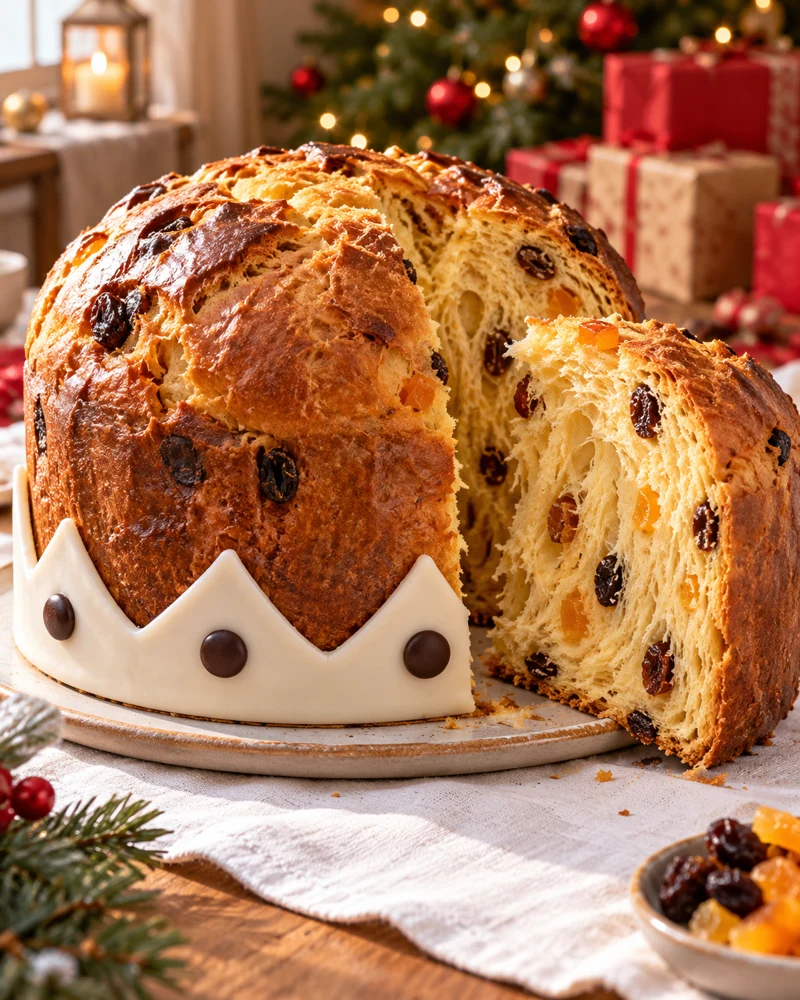
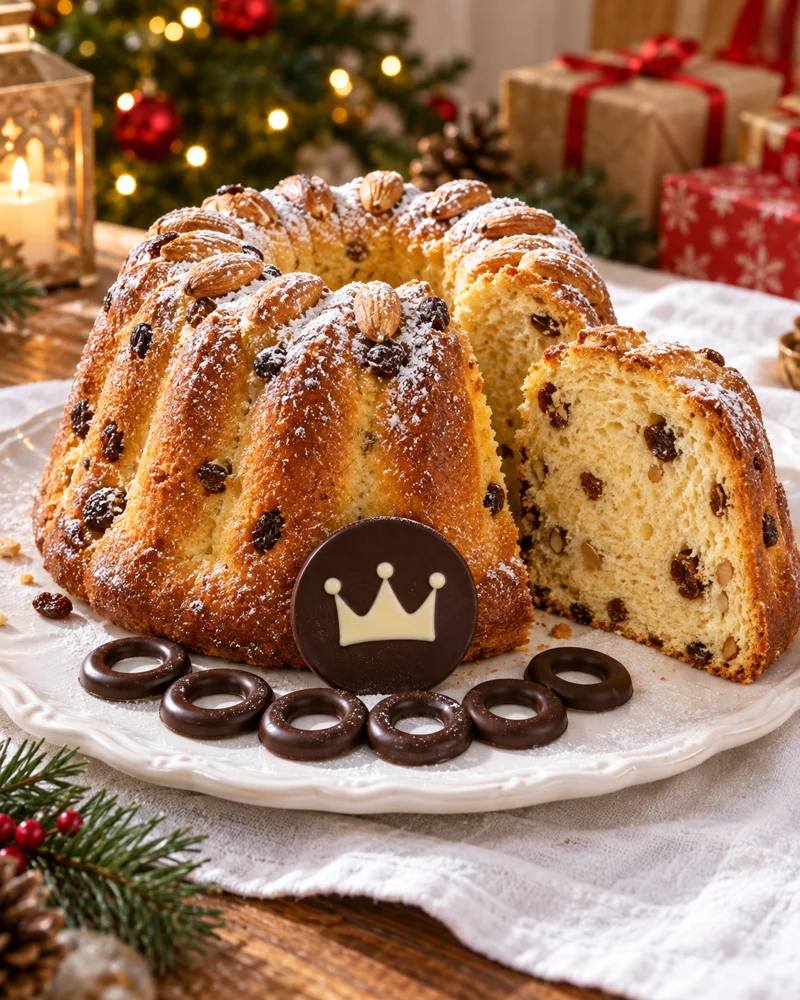
XXL Medallion Kugelhopf
Brioche / raisins / almond / chocolate
The jewel of Christmas brunch.
Kitchen Mode and Timer
Keep the recipe at hand during preparation.
Enables JavaScript to use the kitchen tools.
Visual Timer: Keeps this page open. It does not sound an alarm. The cooking remains to be monitored.
That's all you need!
Equip me with a pack.If you miss something, choose your ingredients from Monoprix and your utensils on Amazon. Adjust the quantities to your guests, then uncheck what you already have.
Choose the number of guests and uncheck what you already have at home.
This sheet indicates a yield in parts or in weight. Specify your basis for calculating the races.
Your selection contains only the checked items. Check products and availability at Monoprix for ingredients, on Amazon for utensils.
Amazon Affiliate Links. As an Amazon Associate, I earn from qualifying purchases.
Your choices are memorized on this device.
It's up to you.
14 detailed steps, from preparation to service.
Weigh and distinguish the two servings of butter
Prepare 350 g of flour, 7 g of dry yeast, 120 ml of milk, 2 eggs, 70 g of sugar and 4 g of salt. Cut 120 g of soft butter into small dice for the dough and keep separately the 20 g of butter intended for the mold. Also reserve 100 g of raisins, 20 whole almonds and the 20 g of finishing icing sugar. The dough butter should be crushed on the finger without being liquid.
Inflate raisins and prepare liquids
Put the 100 g of raisins in a bowl, cover them with warm water and let them soak for 20 minutes. Drain them in a strainer, then spread them on absorbent paper and dab them; they must no longer bring free water to the dough. Meanwhile, cool the 120 ml of milk to about 30 °C and break the 2 eggs in a small bowl. Beat the eggs with a fork just enough to mix the yolks and whites.
Start the kneading
Pour the 350 g of flour into the bowl of the robot equipped with the hook. Add the 7 g of dry yeast, the 70 g of sugar and the 4 g of salt, then briefly mix the dry ingredients before adding the milk and beaten eggs. Kneaded 8 minutes at slow to medium speed: the dough must come together and begin to become supple. If the yeast indicates a rehydration on its sachet, perform it first with part of the 120 ml of milk measured, without adding additional milk.
Add the butter gradually
Let the robot spin slowly and add the 120 g of butter in three servings. Wait until the previous portion is almost absorbed before adding the next, then continue to knead for about 8 minutes. Stop and scrape the bowl once if butter sticks to the walls. The finished dough should be supple, shiny and slightly sticky; do not add flour simply because it sticks to the fingers.
Spread the raisins and let rise
Add the well-dried raisins and mix at a low speed for about 1 minute, just to distribute them without grinding them. Gather the dough at the bottom of the bowl with a spatula, cover the bowl and place it in a temperate room, ideally around 24 ° C, away from drafts. Let it rise for about 1h30, until the volume has doubled. The volume counts more than the timer: in a cool room, the shoot can take longer.
Butter each groove of the mold
Take the 22 cm kouglof pan and spread the reserved 20 g of butter over the entire inner wall, bottom and central fireplace, with a brush or fingers. Insist in the hollows, where the brioche can hang. Spread the 20 almonds at the bottom of the grooves; if there are fewer hollows than almonds, place the remaining ones regularly next to them. Keep the mold ready before degassing the dough.
Put the dough around the fireplace
Gently press the dough with your fingers to bring out the big bubbles: this is called the degassing. Gather it into a ball with a spatula, then open a hole in the middle with your fingers and widen it. Drop this ring of dough into the mold, around the fireplace, without moving the almonds. Spread the dough evenly all around by pressing very lightly with your fingers.
Waiting for the second shoot
Cover the mold without tightening and lets rise about 1 hour in the same temperate room. The dough should reach approximately three-quarters of the height of the mould; do not bake it yet if it has remained packed at the bottom. Towards the end of the shoot, turn on the oven at 175 °C in conventional oven setting (no fan), oven rack in the bottom third. Remove the laundry before putting the pan in the oven.
Cook and test a crumb area
Bake for 35 to 40 minutes. From 35 minutes, push a long skewer into the thick part of the crown, avoiding aiming at a grape or almond. The skewer should come out without raw dough and the surface should be golden. If necessary, bake for a few more minutes. If the top browns too quickly, cover with baking paper, keeping it clear of the heating element.
Unmould and then cool completely
Remove the pan with oven gloves and let it rest for 10 minutes. Put a wire rack on it, hold the two elements firmly with the oven gloves and return the whole of a controlled gesture. Remove the mold, then let the kouglof cool about 1 h 30: no heat should remain at the base before the decor. The 20 g of icing sugar will be used at the finish, on the areas specified after assembly.
Draw a medallion and six links
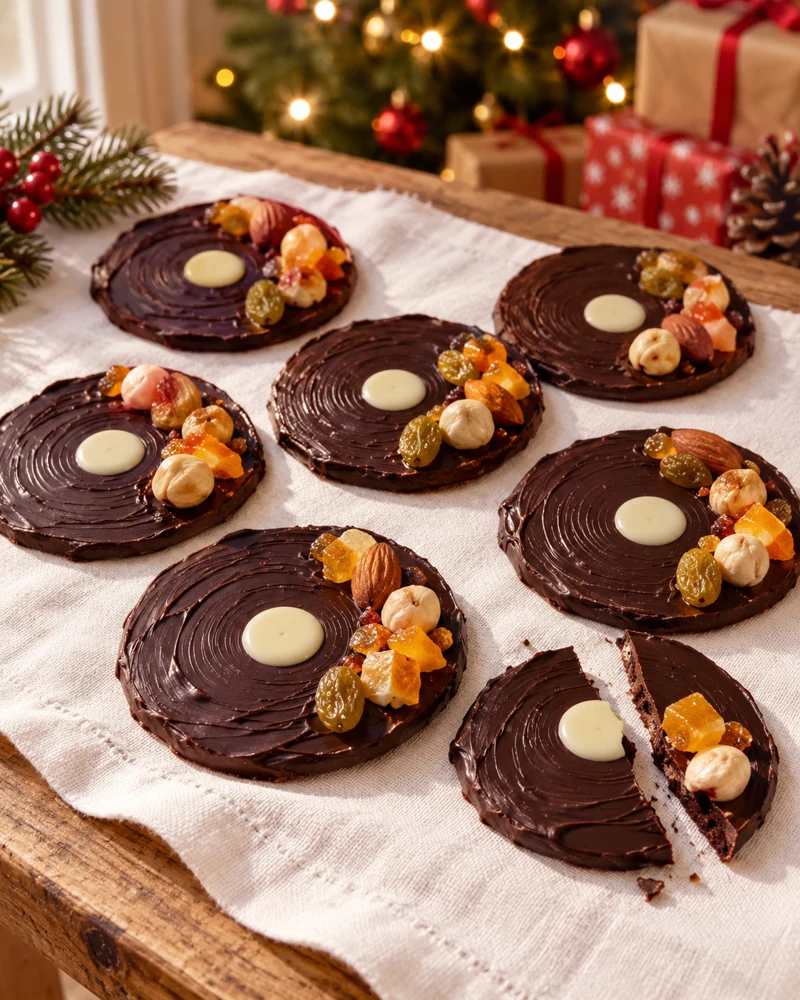
Draw an 8 cm circle and six 4 cm rings on a sheet, then slide it under clean baking paper placed on a tray. The rings should have a visible central opening and a chocolate strip large enough not to break. Prepare two dry bowls, a spoon and a cornet. All these elements will be placed on the plate, without necklace hanging around the cake.
Forming the locket and black rings
Chop the 100 g of dark chocolate with a knife and put them in a small, perfectly dry bowl. Pour 2 cm of water into a saucepan and simmer gently, then lower the heat. Place the bowl above: its bottom should not touch the water. Stir with a spatula until only a few small pieces remain. Remove the bowl from the heat and keep stirring so the residual heat melts them. Wipe the bottom of the bowl; no drop of water should fall into the chocolate. Spread about 30 g on the large disc, 3 to 4 mm thick, then use the rest for the six rings. First trace their outer contour and then fill their strip leaving the center empty. Let it harden for 30 minutes flat in a cool room, until you can lift a room without it bending.
Draw the white crown of the medallion
Chop the 50 g of white chocolate with a knife and put them in a small, perfectly dry bowl. Pour 2 cm of water into a saucepan and simmer gently, then lower the heat. Place the bowl above: its bottom should not touch the water. Stir with a spatula until only a few small pieces remain. Remove the bowl from the heat and keep stirring so the residual heat melts them. Wipe the bottom of the bowl; no drop of water should fall into the chocolate. Fill a small cornet and trace, in the middle of the already firm black medallion, a horizontal base and then three large connected points. Fill this drawing with a layer of regular white chocolate, without fine details. Leave to freeze for another 20 minutes; the surplus white chocolate is kept in small pellets on paper, without thickening the crown unnecessarily.
Assemble the coated collar and powder the kouglof
Place the totally cold kouglof in the center of the dish. Put the 20 g of icing sugar in a small strainer and sprinkle the top of the brioche, without trying to fill its grooves. Carefully peel the medallion and rings by curving the paper, then lays the medallion flat in front of the base and the six arched rings around the cake. Each element rests on the plate; do not attempt to hang or nest them.
Conservation. 2 days under bell; possible freezing in slices.
Namely. Recipe proposal: follow the quantities and texture marks of the card. Indicative times. The rendering depends on the ingredients and materials used. The objects of the photographic decoration remain out of the dish.
Baking tips for this recipe
- Weigh the yeast and uses the type indicated in the recipe: yeast and yeast are not interchangeable.
- Observe the increase in volume during shoots. A cool room can lengthen the times indicated.
- Respect the dimensions of the mold and the amount of dough: a brioche too tight or too full does not cook in the same way.
Substitutions and variations
Blond or brown raisins can be used at the same weight; retains the soaking step when it is planned.
Keep the type of chocolate provided for the structure or ganache. Switching from dark chocolate to white chocolate changes the balance: the quantities do not transpose directly.
More treats for your Christmas table
Recipes that share ingredients or the same preparation family.