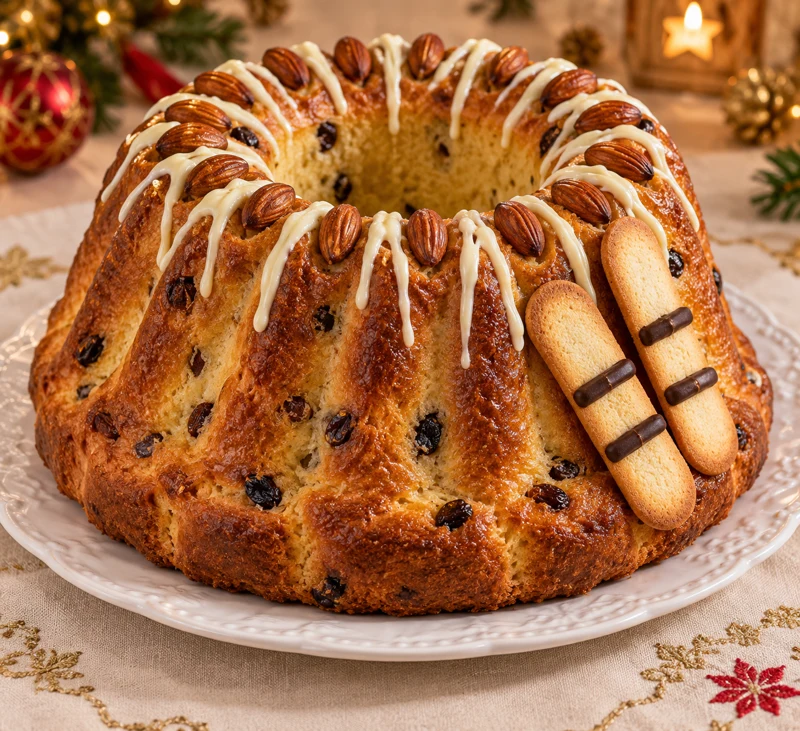
Ski Resort Kugelhopf
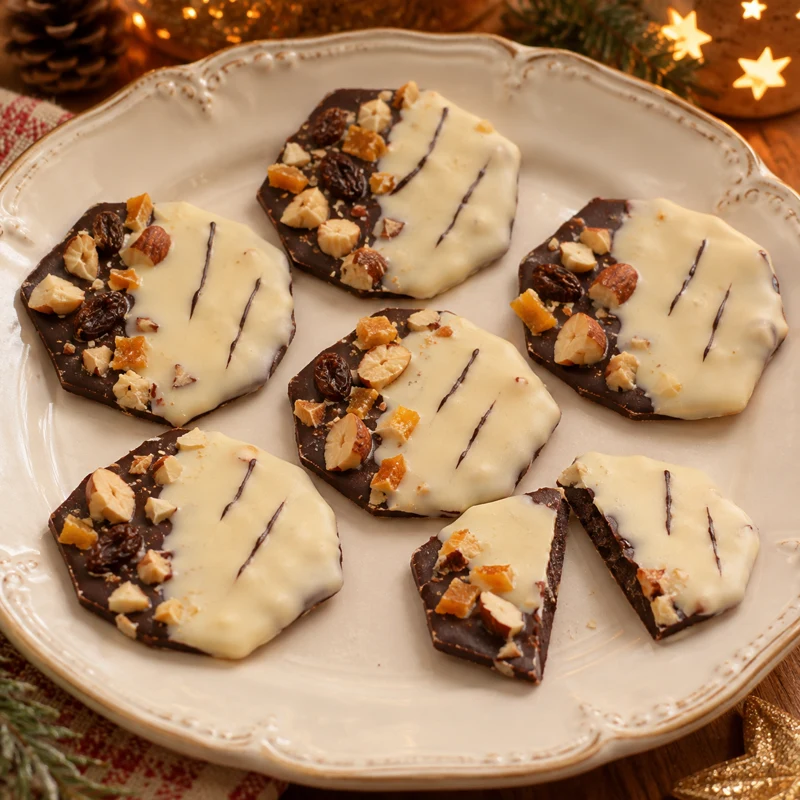
raisins / almond / white chocolate
The hole becomes a valley.
Kitchen Mode and Timer
Keep the recipe at hand during preparation.
Enables JavaScript to use the kitchen tools.
Visual Timer: Keeps this page open. It does not sound an alarm. The cooking remains to be monitored.
That's all you need!
Equip me with a pack.If you miss something, choose your ingredients from Monoprix and your utensils on Amazon. Adjust the quantities to your guests, then uncheck what you already have.
Choose the number of guests and uncheck what you already have at home.
This sheet indicates a yield in parts or in weight. Specify your basis for calculating the races.
Your selection contains only the checked items. Check products and availability at Monoprix for ingredients, on Amazon for utensils.
Amazon Affiliate Links. As an Amazon Associate, I earn from qualifying purchases.
Your choices are memorized on this device.
It's up to you.
17 detailed steps from preparation to service.
Prepare the raisins and paste ingredients
Put the 100 g of raisins in a bowl and cover with warm water for 20 minutes. Weigh 350 g of flour, 70 g of sugar, 4 g of salt and 7 g of dry yeast; read its package, as some yeasts need to be rehydrated. Cut the 120 g of soft butter from the dough into cubes, distinct from the 20 g reserved for the mold.
Measuring milk and breaking eggs
Heat the 120 ml of milk to about 30 °C, checking with a thermometer: it should be warm and not hot. If the manufacturer requests rehydration, mix the yeast with part of this milk according to its instructions, without adding any additional milk. Break the 2 eggs one by one in a small bowl, check the shells and beat them briefly with a fork.
Forming a first paste
Pour the flour and sugar into the vat of the robot equipped with a hook or into a large bowl. Add the beaten eggs and milk, then the yeast prepared or dried according to its instructions; put the salt on the side before mixing immediately. Work at a small speed, or with a spoon and then by hand, until no dry flour remains at the bottom.
Knead before incorporating butter
Kneaded about 8 minutes at slow to medium speed. By hand, fold the dough towards you, push it with the palm and turn it a quarter turn, for 10 to 12 minutes. It must begin to become smoother and elastic; resists the urge to add a lot of flour if it still sticks.
Stir in the butter cubes gradually
Add 120 g of soft butter in three servings, kneading between each addition. Wait until the first portion is absorbed before adding the next; the dough may seem defeated at first and then gather. Kneaded again about 8 minutes with the robot, more by hand, until a soft and elastic paste that partially detaches from the walls.
Dry and distribute the raisins
Drain the raisins in a strainer and spread them on clean paper or cloth to remove surface water. Add them to the dough and mix slowly for 1 minute, or fold the dough several times by hand. The raisins should be spread everywhere, without adding their soaking water to the dough.
Let double the volume
Gather the dough into a ball in the bowl and cover it to prevent a crust from forming. Let rise about 1 h 30 in a temperate room, away from drafts. Observe the volume rather than the watch: the dough must roughly double; if the piece is fresh, extend the rise instead of placing it against a burning source.
Butter the mould and arrange the almonds
Use the 20 g of butter reserved for the mould to carefully coat a 22 cm kouglof mould, including the grooves and the central chimney. Place the 20 whole almonds at the bottom, distributing them in the hollows; if the number of grooves differs, distribute the almonds regularly. The butter helps to maintain them during the placement of the dough.
Degassing and installing the dough
Gently press the fist into the raised dough to flush out some of the gas, then fold it two or three times. Shapes a ball and opens a hole in the center with the fingers to let the chimney of the mold through. Place the dough in the mold, spread it around the fireplace and even its height without crushing it heavily.
Let it swell in the mold
Cover the pan slightly and let rise for about 1 hour, until the dough reaches three-quarters of its height. Preheat the oven to 175 °C in conventional oven setting (no fan) towards the end of this rise, with an oven rack at the bottom of the oven. Remove the cover before baking; the dough should be inflated, not dried on the surface.
Cook and control the heart of the brioche
Bake for 35 to 40 minutes. From 35 minutes, plant a long skewer in a thick part, without touching the fireplace: it must come out without raw paste glued. If the top color too fast, cover with a sheet of baking paper, without blocking the circulation of air; prolong a few minutes if the center remains raw.
Unmold and let cool
Pull out the mold with oven gloves and wait 10 minutes. Lay a grille on it, hold the whole with the hands protected and then turn it over with an assured movement; gently lift the mold. Let it cool completely at least 1 hour before the decor, because the chocolate would flow too quickly on a hot brioche.
Lightly powder the flanks
Place the wire rack on top of a leaf to collect the sugar. Put the 20 g of icing sugar in a small strainer and spread a light veil over the cold kouglof, especially on the flanks; keeps the almonds visible. Then transfer the brioche on its serving dish before fixing the skis, so as not to move the fragile decor.
Preparing snow tracks
Chop the 100 g of white chocolate and put them in a small, perfectly dry bowl. Pour 2 cm of water into a saucepan, heat until it simmers and then lower the heat. Set the bowl over the pan without letting it touch the water. Stir with a spatula and remove as soon as the last pieces melt. Wipe the bottom of the bowl: no drop of water should fall into the chocolate. Let cool for a few minutes, then lay broad strokes from the top to the sides with a spoon. Spread the chocolate around the kouglof without filling the central hole or masking all the grooves; keep two small drops to fix the cookies.
Installing the skis fully supported
Place the 2 cat tongues of about 15 g in total side by side on a wide slope of the kouglof, making them rest on the cake along their entire length. Attach them with the two reserved drops of white chocolate. Do not plant them vertically and do not overtake them in a vacuum; hold them for a few seconds until they no longer slip.
Draw the Dark Fixations
Chop the 10 g of dark chocolate and put them in a small, perfectly dry bowl. Pour 2 cm of water into a saucepan, heat until it simmers and then lower the heat. Set the bowl over the pan without letting it touch the water. Stir with a spatula and remove as soon as the last pieces melt. Wipe the bottom of the bowl: no drop of water should fall into the chocolate. Put the chocolate in a small cone and draw two transverse strips on each cat tongue, keeping the biscuit visible between the strips. A surplus can harden on paper to be served next to it; cookies should not be completely coated.
Allow to be taken and served
Let the decor take 30 minutes in a cool room before cutting the kouglof. To keep crunchy, put the skis on the day of service if the brioche was prepared the day before. Serve in slices using a bread knife, and also distribute the almonds and biscuits among the diners.
Conservation. 2 days under bell; possible freezing in slices.
Namely. Recipe proposal: follow the quantities and texture marks of the card. Indicative times. The rendering depends on the ingredients and materials used. The objects of the photographic decoration remain out of the dish.
Baking tips for this recipe
- Weigh the yeast and uses the type indicated in the recipe: yeast and yeast are not interchangeable.
- Observe the increase in volume during shoots. A cool room can lengthen the times indicated.
- Respect the dimensions of the mold and the amount of dough: a brioche too tight or too full does not cook in the same way.
Substitutions and variations
Blond or brown raisins can be used at the same weight; retains the soaking step when it is planned.
Keep the type of chocolate provided for the structure or ganache. Switching from dark chocolate to white chocolate changes the balance: the quantities do not transpose directly.
More treats for your Christmas table
Recipes that share ingredients or the same preparation family.